
Promising Markets For Avocado
Overview
Lebanon is gradually strengthening its position in the global avocado export market. The country’s avocado exports increased significantly, rising from USD 433,000 in 2021 to USD 8.2 million in 2024, highlighting strong growth trends and considerable untapped potential, as well as opportunities to enter new and promising markets.
Notably, Lebanon holds strong prospects for expanding its market share in both European and Middle Eastern markets.
This report provides an overview of Lebanon’s current production and exports of avocados, its position in the international markets, and the opportunities available to further develop the country’s export potential, with the overall objective of enhancing the capacity and competitiveness of Lebanese exporters.
Product Definition
Avocados are cultivated in tropical and Mediterranean climates of many countries.
Hass avocados are at the top of the list of products with the most potential in the next few years.
Where do Lebanese avocados currently go to?
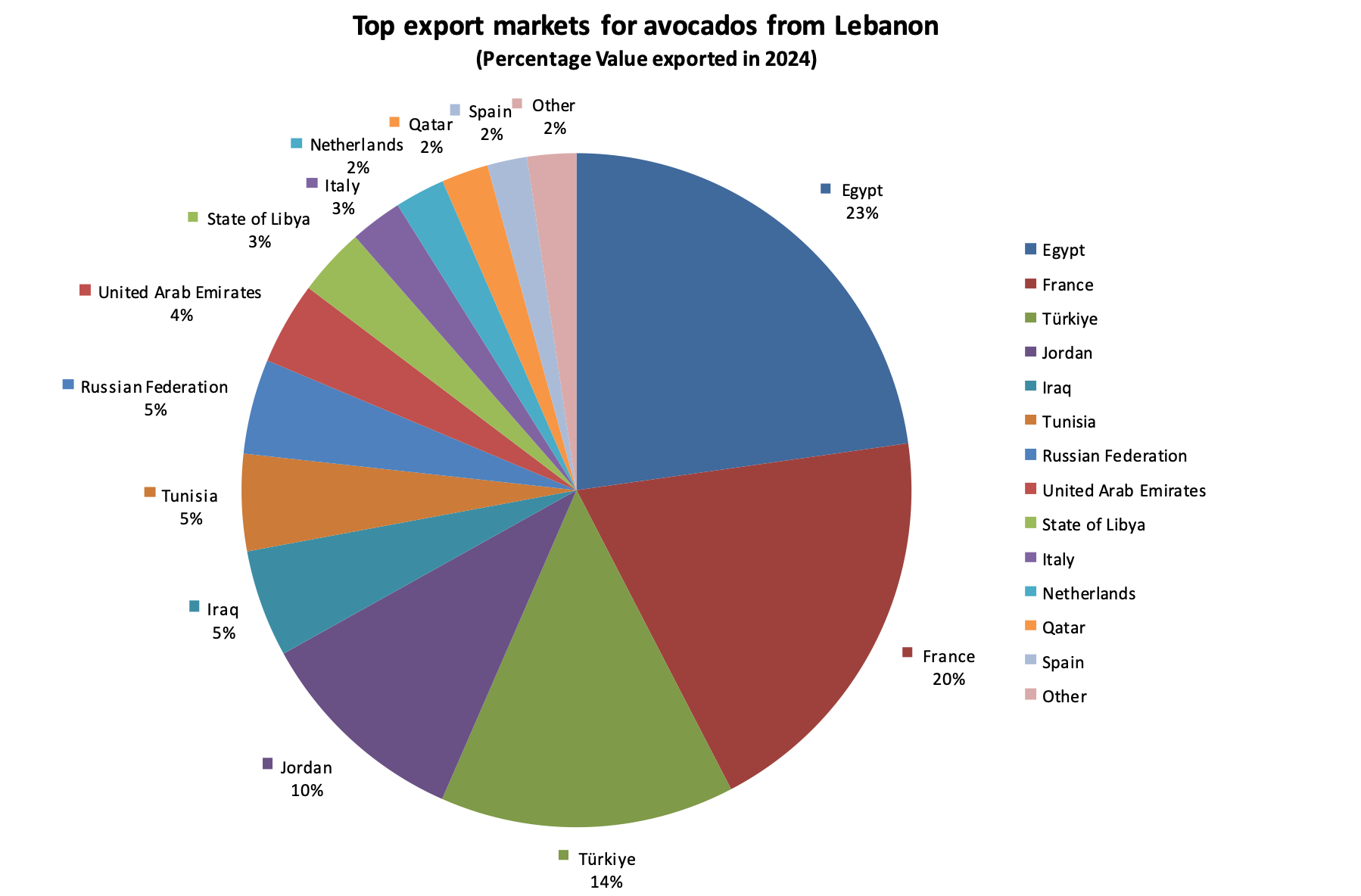
Figure 1 shows that Lebanon has successfully accessed the European market, with France ranking the second-largest destination for Lebanese exports, while Italy, the Netherlands and Spain account for 7% of total exports.
Egypt, Turkey, Jordan and other Middle Eastern countries are also top destinations for Lebanese avocado exports in 2024.
Research conducted on Lebanese avocado exports some years ago highlighted a strong potential for Lebanon to enter the European market. A comparison with recent data shows that Lebanon has indeed entered this market, with France now ranking as its second-largest export destination. Exports have also expanded to other European countries, indicating significant potential in markets such as the Netherlands, Italy and Spain. Based on these trends, forecasts suggest a more aggressive market entry into these countries in the coming years.
Figure 1. Top export markets for avocados from Lebanon in 2024 - Source: ITC Trade map
Whats is lebanon's position in the international Market?
Lebanon has maintained steady export values over the last four years, accounting for around 0.1% share in world export and ranking 28th among global exporters. Lebanon is mainly in competition with the other supplying countries from the Middle East and in terms of import tariffs applied worldwide, avocados trade can be considered as a level playing field.
Largest Avocado Producers
By far, the largest producer and exporter of Avocados globally is Mexico, with an export value of USD 3.8 Billion in 2024. Mexico has 3 times the production and exports of its closest rival, Peru. The top two producers account for an estimate of 54% of worldwide production in 2024.
Largest Avocado Producers
in the Mediterranean region The largest three avocado producers in the Mediterranean region are Spain, Israel, and Morocco. Turkey, despite being the top regional producer for most fruit crops, has limited avocado production due to its climate conditions. Lebanon’s avocado production is growing rapidly, with data showing 20,300 tons produced in 2023, an estimate of 25,000 tons annually in 2025, and projections to attain 30,000 tons in the upcoming few years.
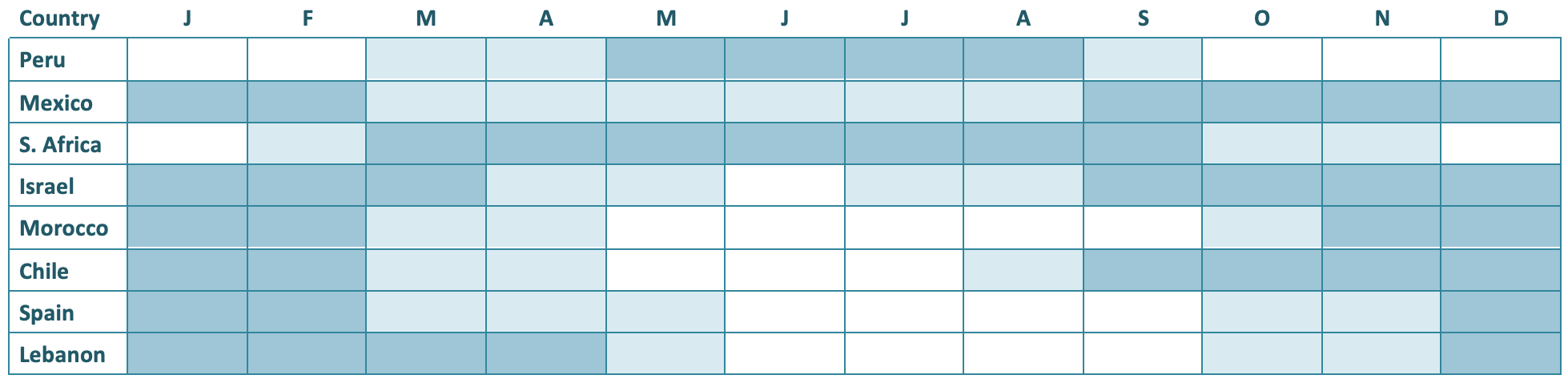
In table 1, the darker blue means it is a peak harvest month, whereas the clearer blue shows a slower harvest time.
The main avocado harvest window in Lebanon runs from December through May, with some early varieties starting in late autumn and others extending into July. The peak season allows for consistent supply to both local and export markets, particularly during the winter months. In the regional competitive countries, Morocco and Israel have somewhat similar harvest windows, therefore representing a high regional competition for Lebanese avocados exports.
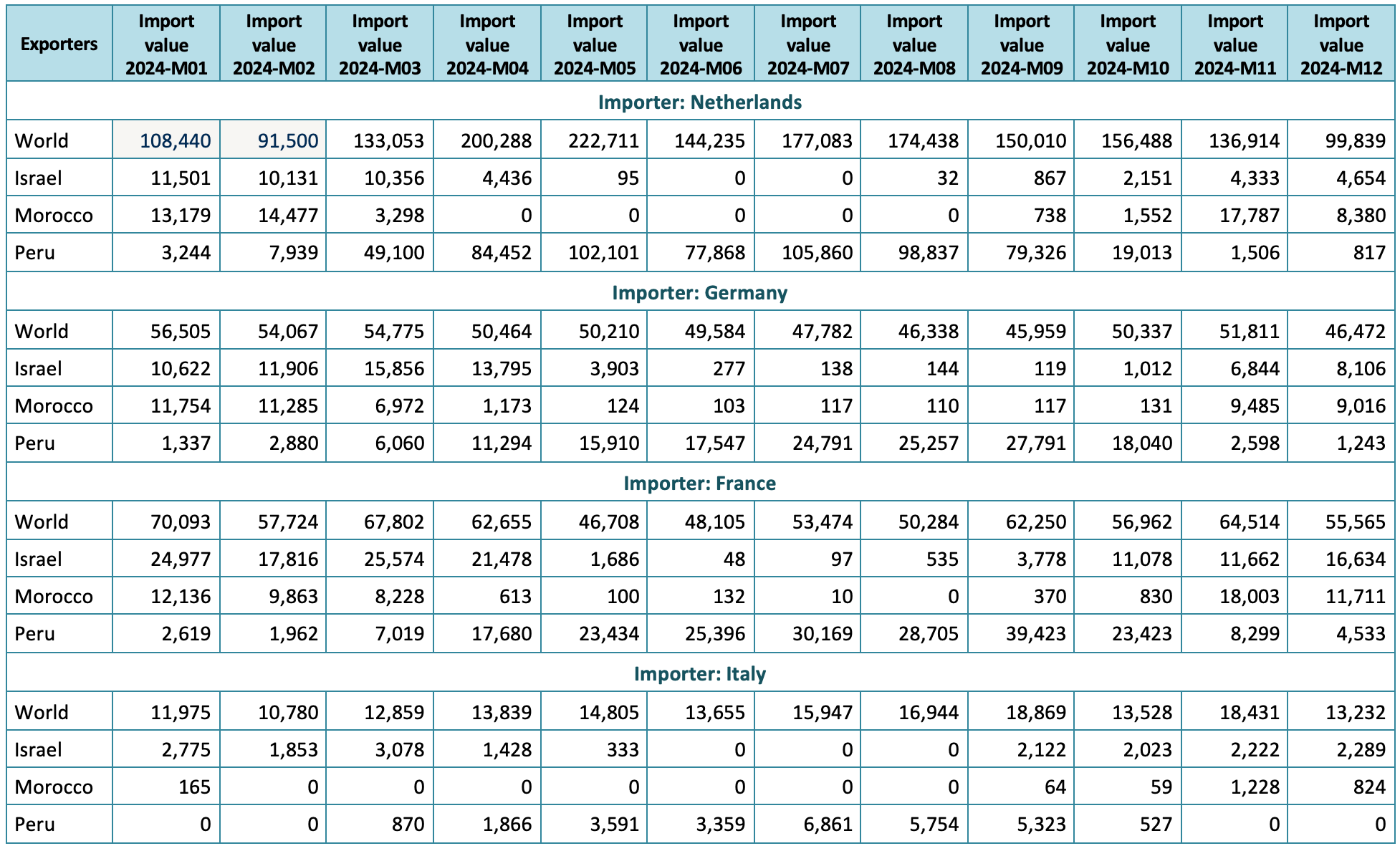
Furthermore, if we analyze the import of avocados in the top importers EU countries, in Table 2 we can spot a decrease in import from Morocco and Israel starting May. This creates a window for the late Lebanese avocados varieties (such as Lamb Hass and Reed) with harvest extending into June and July.
Figure 2. Leading Exporters for Avocados 2024 - Source: ITC Trade map
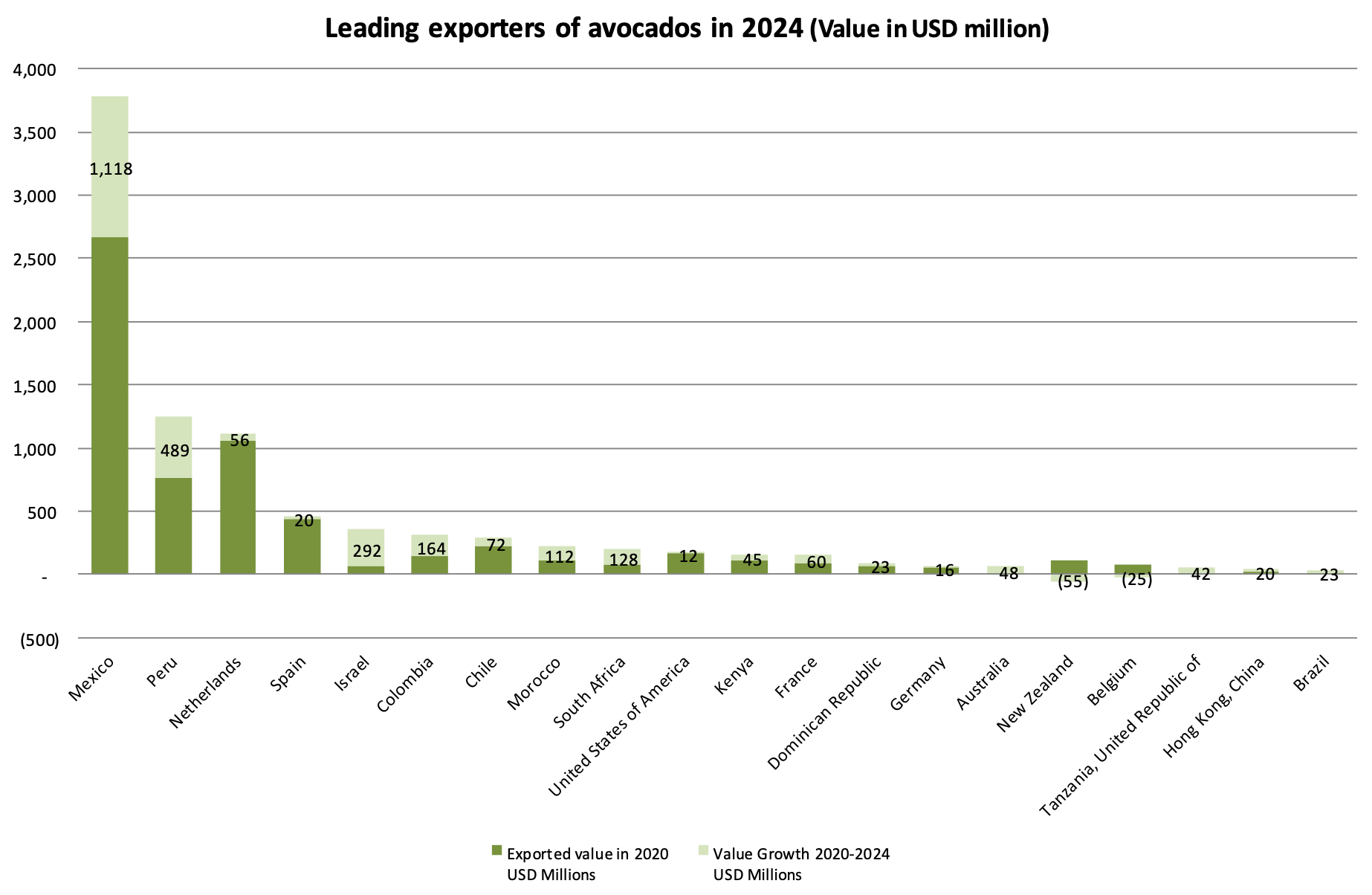
Table 1. Overview of avocados harvest windows in the world’s leading production countries
What are the trends in trade in the 20 largest importing countries?
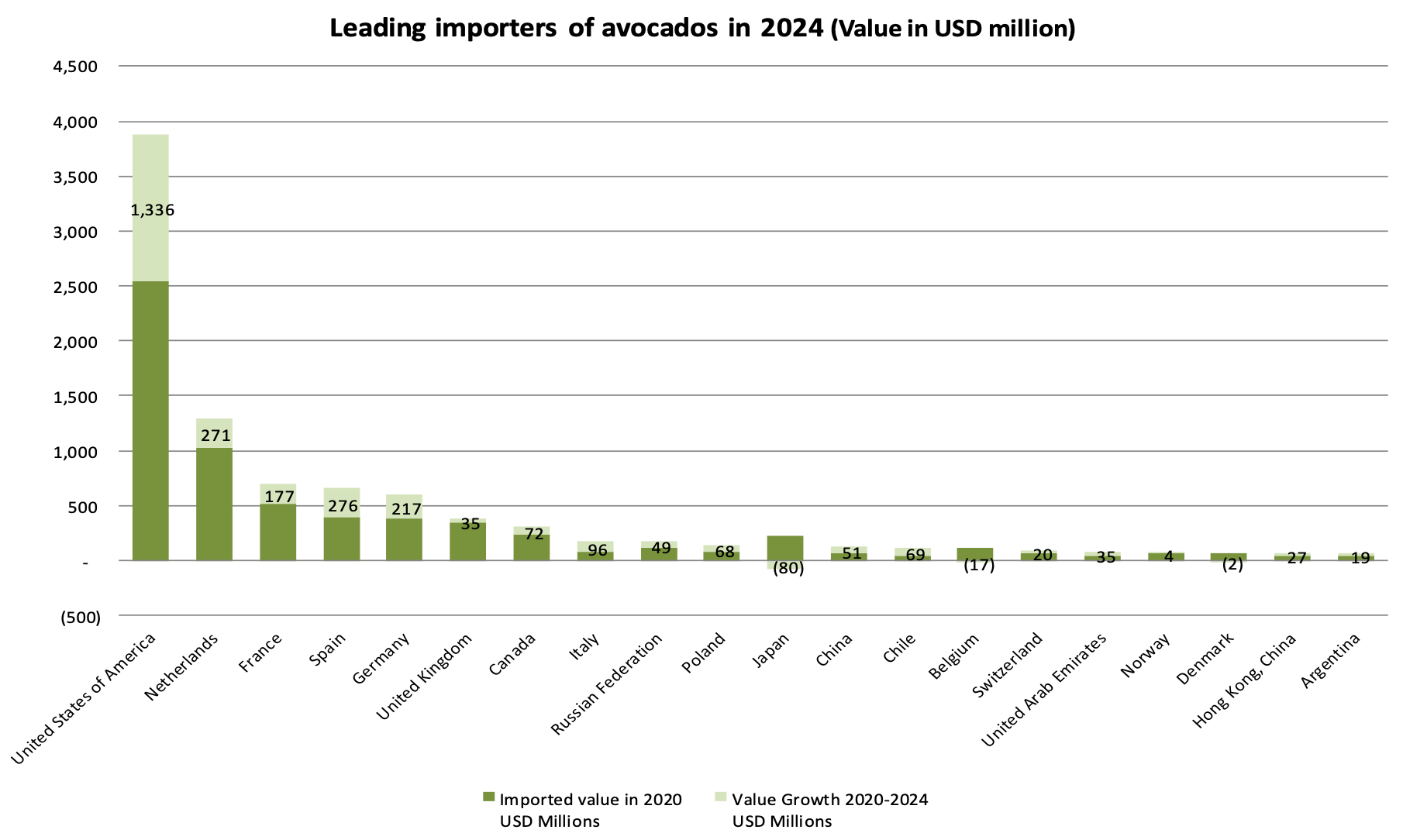
. The European region is the second largest importing market of avocados after the US. The main importers in the EU are Netherlands, France, Spain, Germany and UK, which show just how much Europe is a potential market for Lebanon.
As for the Asian market, The Russian Federation is the main importer of avocado, followed by Japan and China.
Interestingly, the per capita import statistics of 2024 (as shown in Fig. 4 below); show that Spain, Norway, Denmark, United States, and France topped in avocado consumption. It also shows that there is still a huge potential for growth in countries with lower per capita like UAE, Germany, UK, and Italy.
Avocado is a promising product. According to stat ranker, the global avocado market is expected to continue to grow, with projections of a USD 20 billion market by 2030. Besides, the price of avocados is constantly increasing, and is expected to stay high. It is estimated that the per capita consumption of avocados will grow even further in the next coming years, with a huge potential for growth in the European markets, especially Germany and Italy, which are already starting to increase their avocado imports. Experts assume that it is still possible that import volumes will double, provided the market attains supply chain and price stability.
Figure 4. Top 20 countries with highest net import value of avocado in USD per capita in 2024 - Source: ITC Trade map
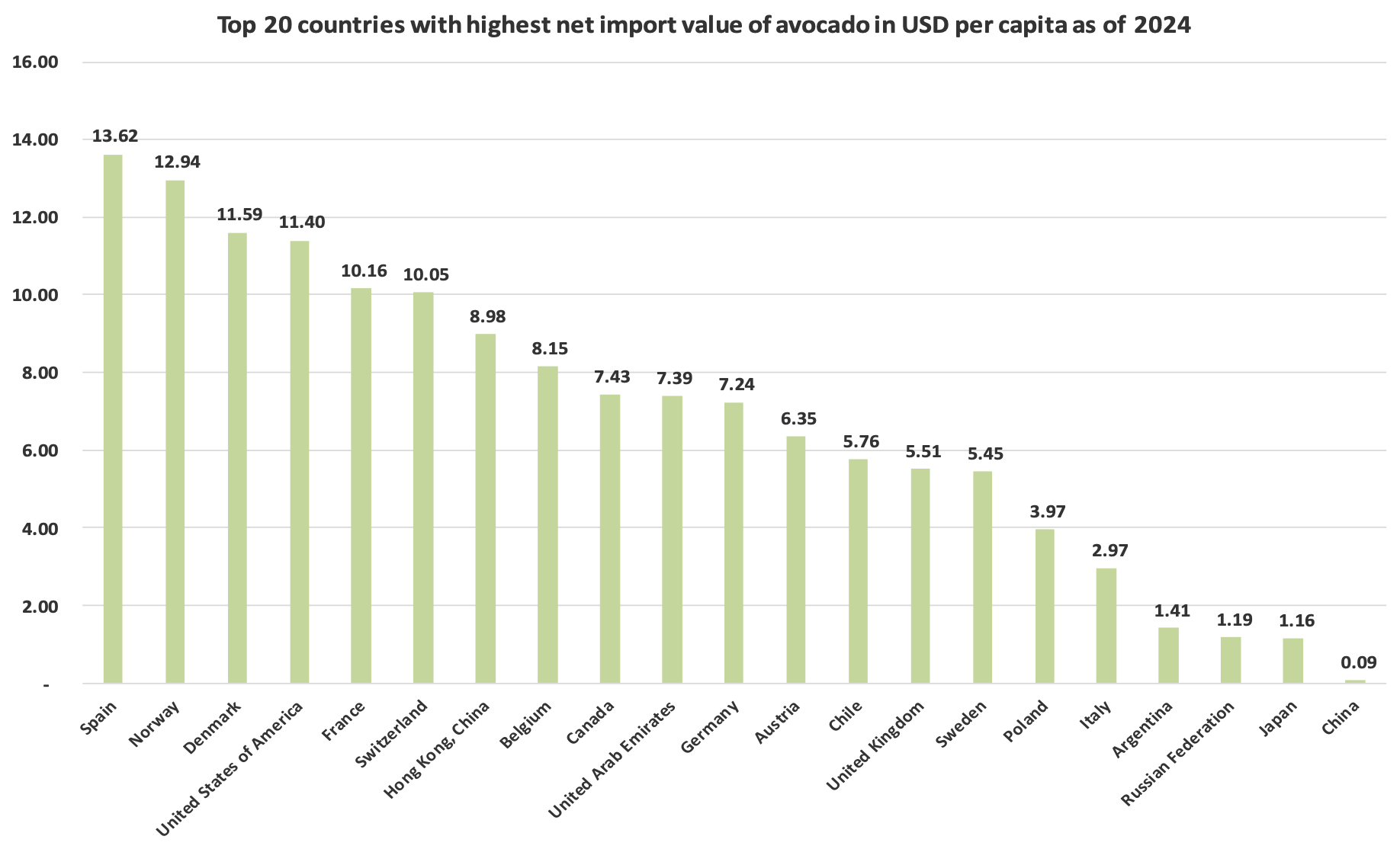
Figure 3. Leading importers for avocados in 2024 - Source: ITC Trade map
What are the trends in the European market?
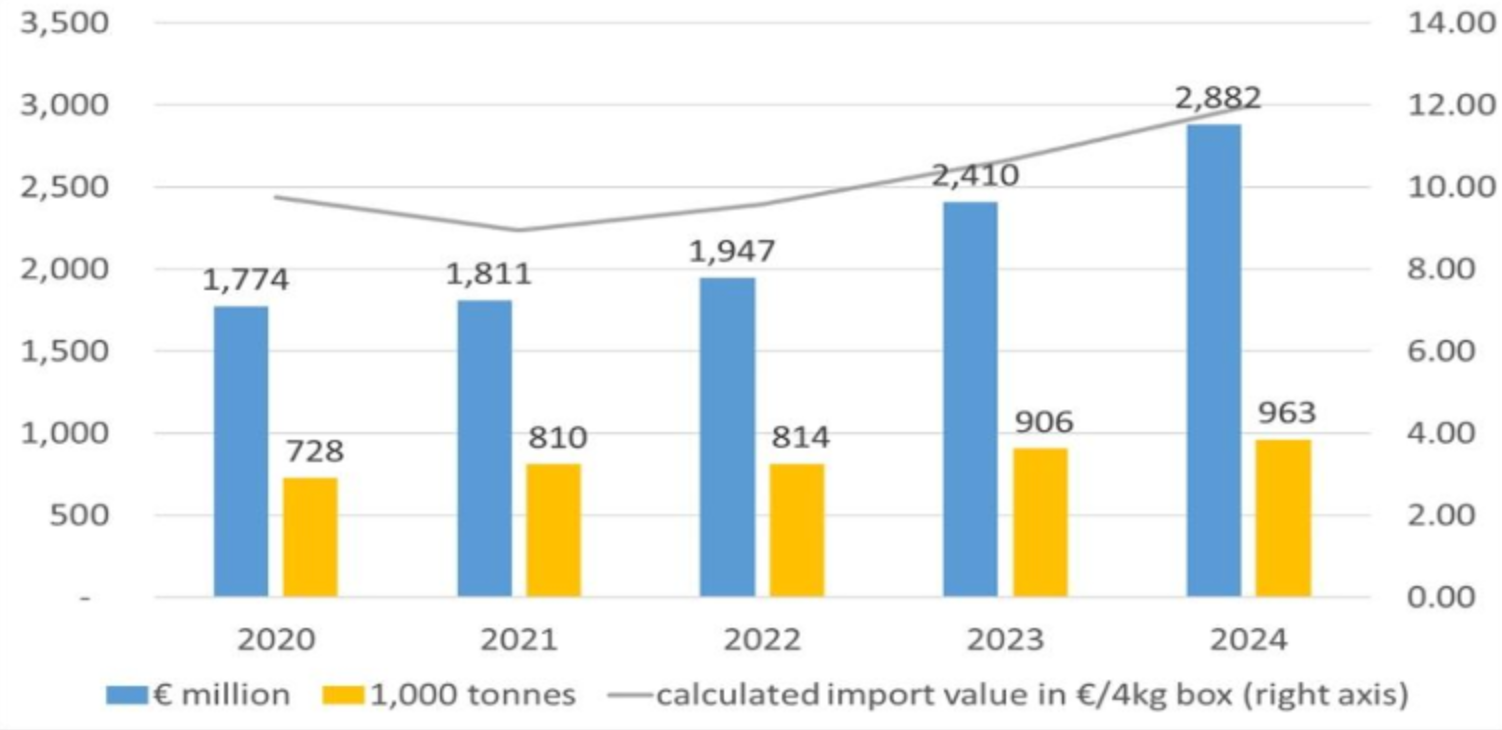
Another important trend is the growing importance of retail programmes, ripening and consistent quality. As a result, exporters must compete not only on volume, but also on reliability, compliance and product performance in order to remain competitive in the European market. For more information, see the full CBI study: The European market potential for avocados | CBI. However, growth across Europe is becoming more uneven. France and the Scandinavian countries are considered relatively mature markets, while Germany, Italy and parts of Eastern Europe continue to offer stronger growth opportunities. At the same time, the market is becoming more competitive and more volatile, particularly during peak supply periods such as the Peruvian season, when larger volumes can put downward pressure on prices.
Figure 6. Details and development of the main European avocado markets in 2024
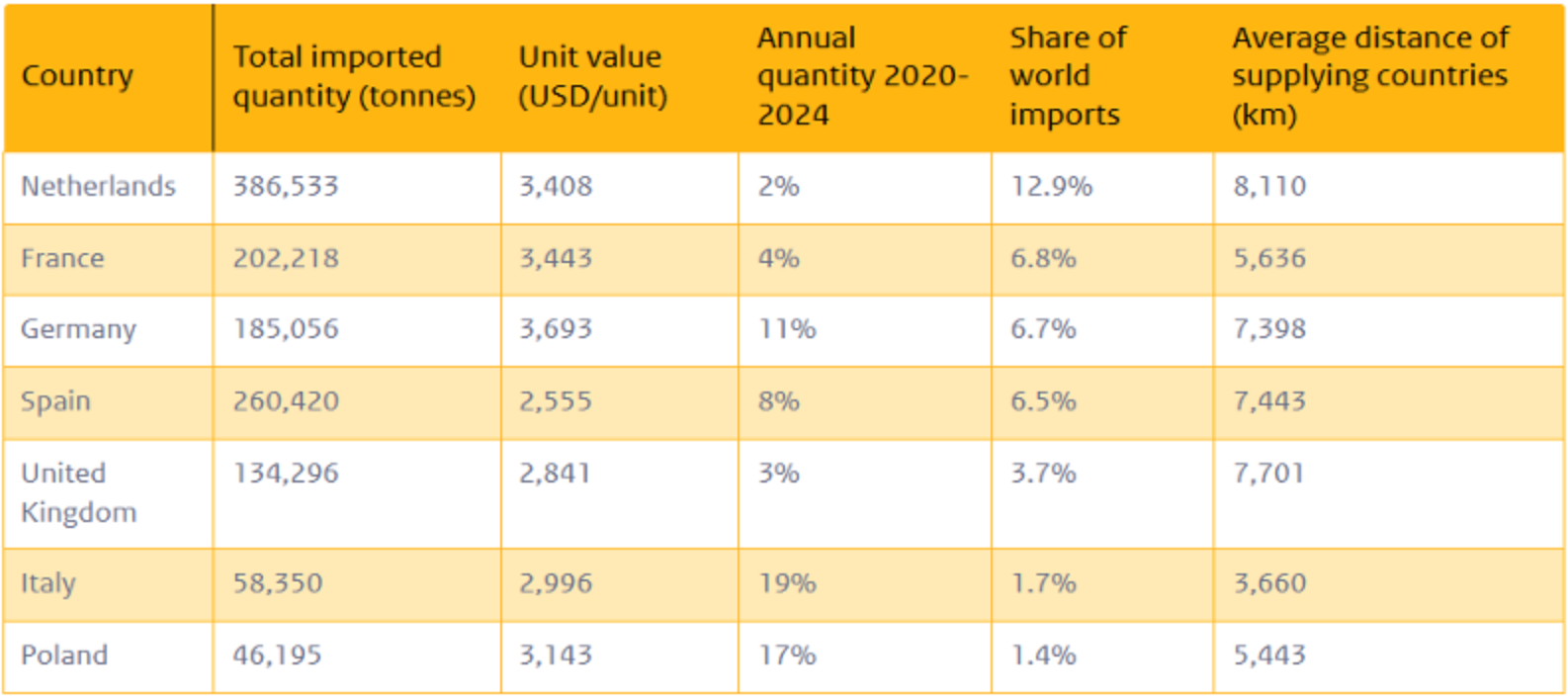
Figure 5. European import (EU-27 + UK + EFTA) of avocados with non-European origin
What are the trends in trade in the Middle Eastern Market?
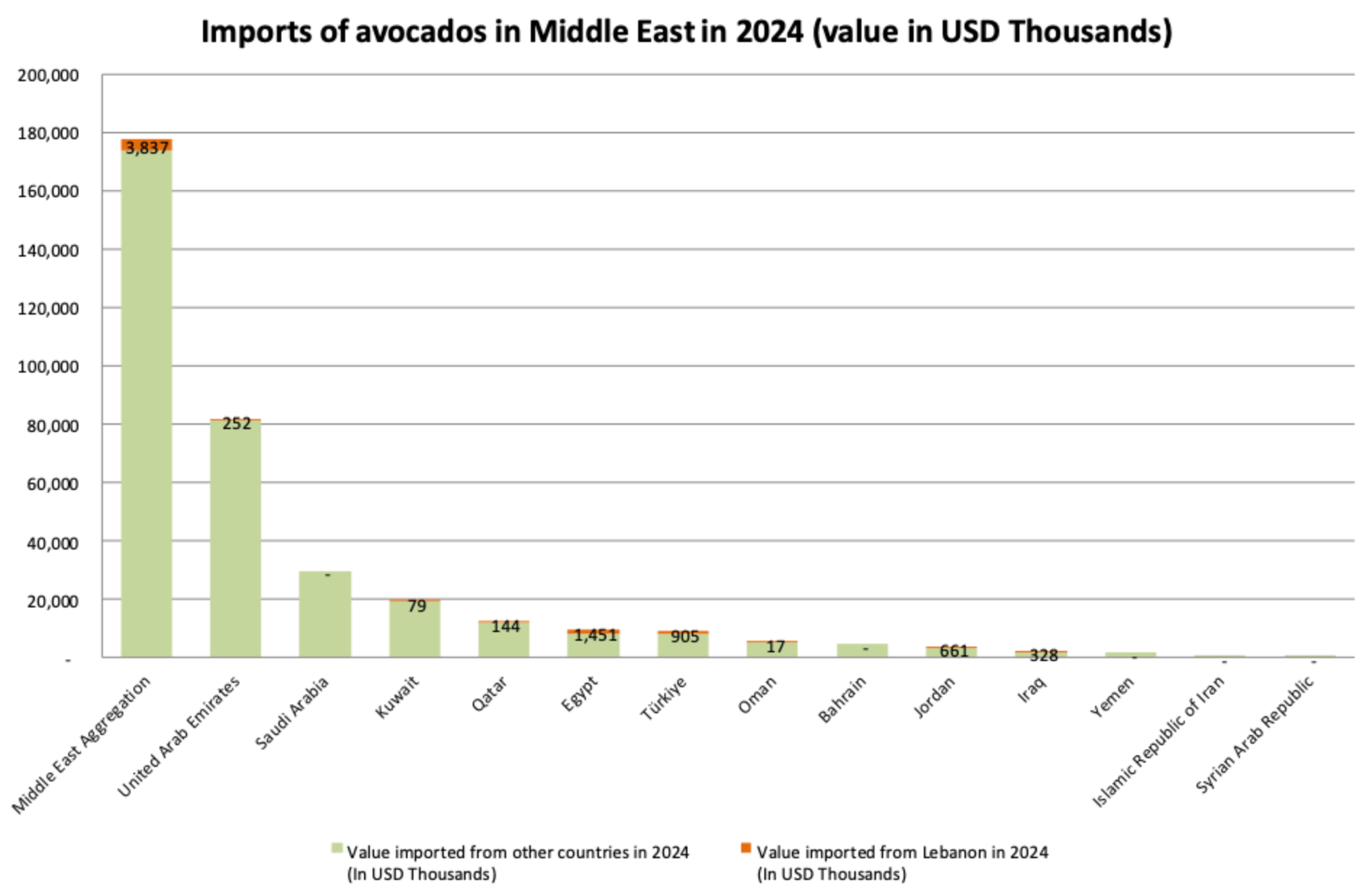
Lebanon mainly exports its avocados to Egypt, Turkey, Jordan and Iraq. In the GCC market, Lebanon mainly exports to UAE and Qatar.
In terms of per capita consumption, the UAE stands out with more than twice the consumption of other countries such as Qatar, Kuwait, and Bahrain. The Figure 8 below shows there is still a lot of growth possible in most of the GCC market countries.
Figure 8. GCC and ME imports of avocados in USD per capita as of 2024 - Source: ITC Trade map
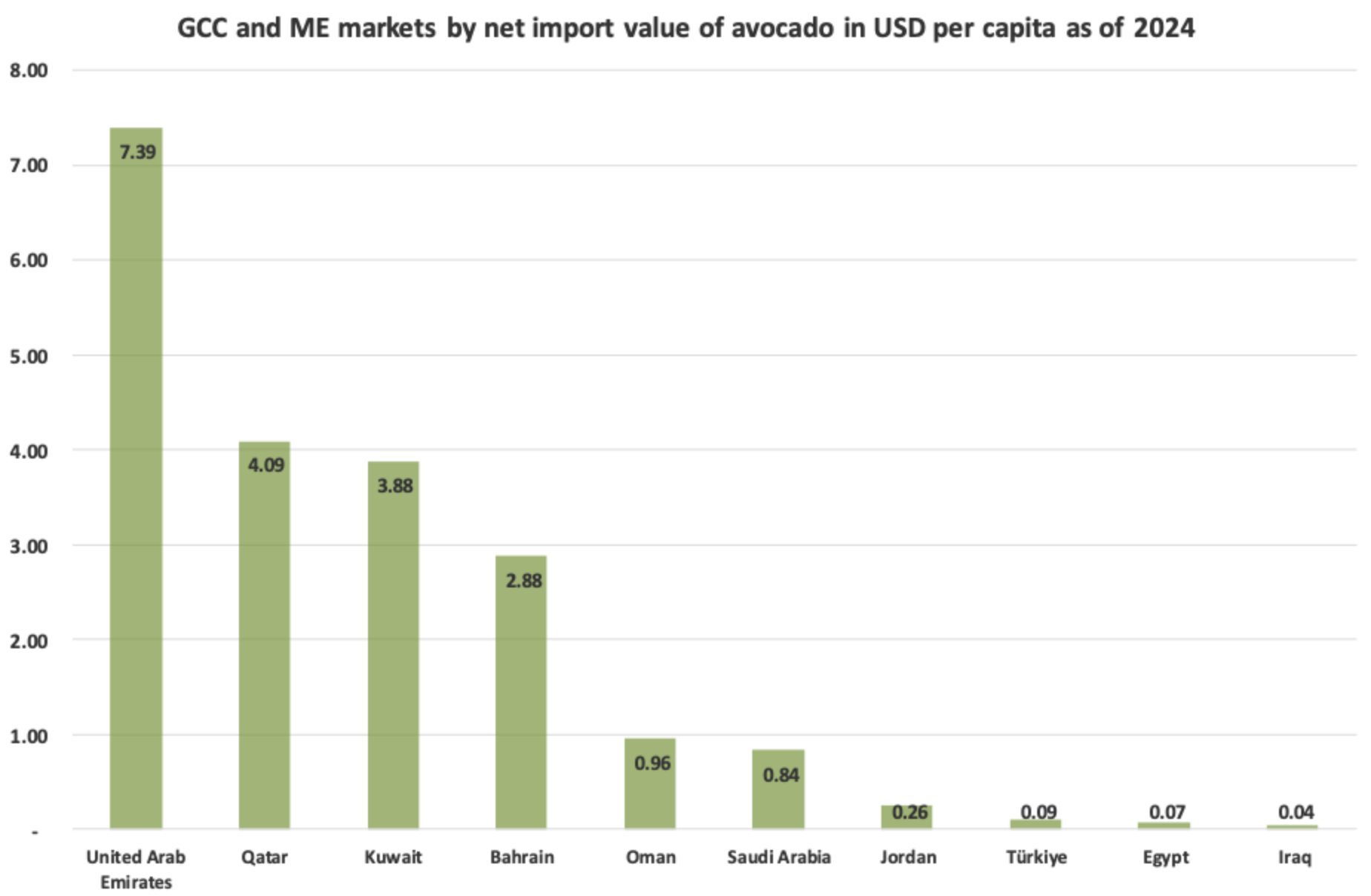
Figure 7. Imports of avocados in Middle East in 2024 - Source: ITC Trade map
What are interesting markets for the future?
Existing studies from years prior to 2022 show that these countries were potential markets for Lebanon several years ago, the numbers below show that Lebanon succeeded in entering these markets.
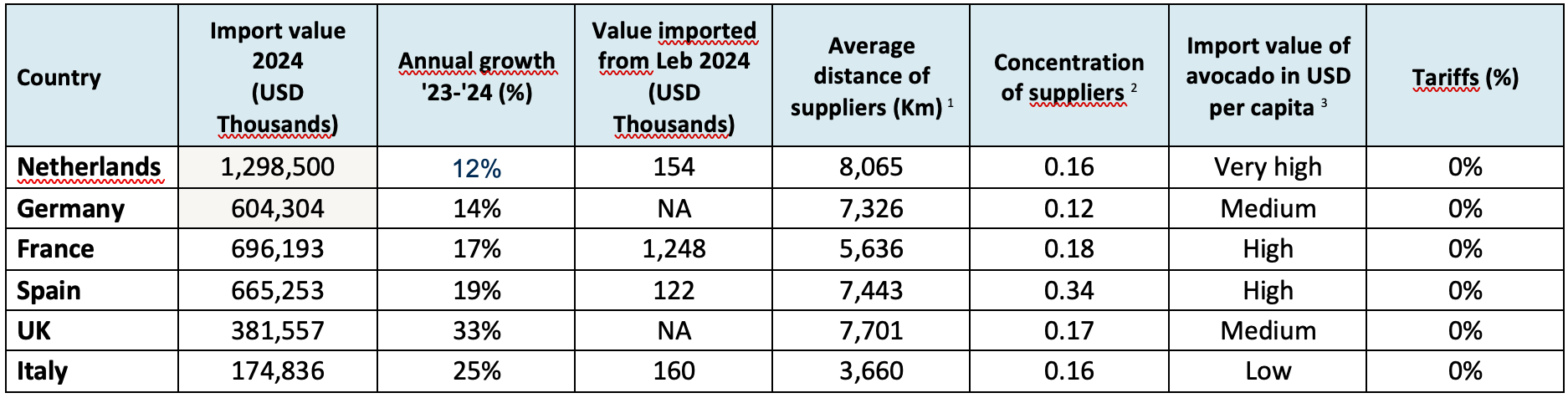
Based on the calculation and analysis in table 3, 6 countries in Europe were identified as promising and offering great opportunities for Lebanese exporters of avocadoes. These countries include Netherlands, Germany, France, Spain, United Kingdom and Italy. All of these countries are growing their avocado imports, with a Import value of avocado in USD per capita good enough. In addition, all of them do import from different countries, not necessarily neighboring countries, which makes Lebanon a great option.
Table 3 below provides an overview of these potential export markets including the main used indicators.
As for the markets in the Middle East and North Africa, including GCC, five countries were identified as potential markets for growth as seen in table 4. Here, the countries, Egypt, Turkey, UAE and Kuwait all already import avocado’s from Lebanon. Based on the analysis of indicators listed in the table, these countries will offer potential for more supply of Lebanese avocado’s in the years to come.
The results of the model are also consistent with the CBI study, The European market potential for avocados. In 2024, the Netherlands imported 386,533 tons of avocados, with an average unit value of USD 3,408 per ton, confirming its role as the main European trade hub. Spain imported 260,420 tons at an average unit value of USD 2,555 per ton, reflecting its growing importance as both a destination market and a redistribution hub. France imported 202,218 tons with a unit value of USD 3,443 per ton, showing the strength of its high-quality destination market, while Germany imported 185,056 tons at USD 3,693 per ton, underlining both its market size and relatively high value. These figures support the identification of the Netherlands, Germany, France and Spain as the main European potential markets for Lebanese avocados.
For more information, see the full CBI study: The European market potential for avocados | CBI.
Table 4. Top potential (existing) export markets for avocados from Lebanon
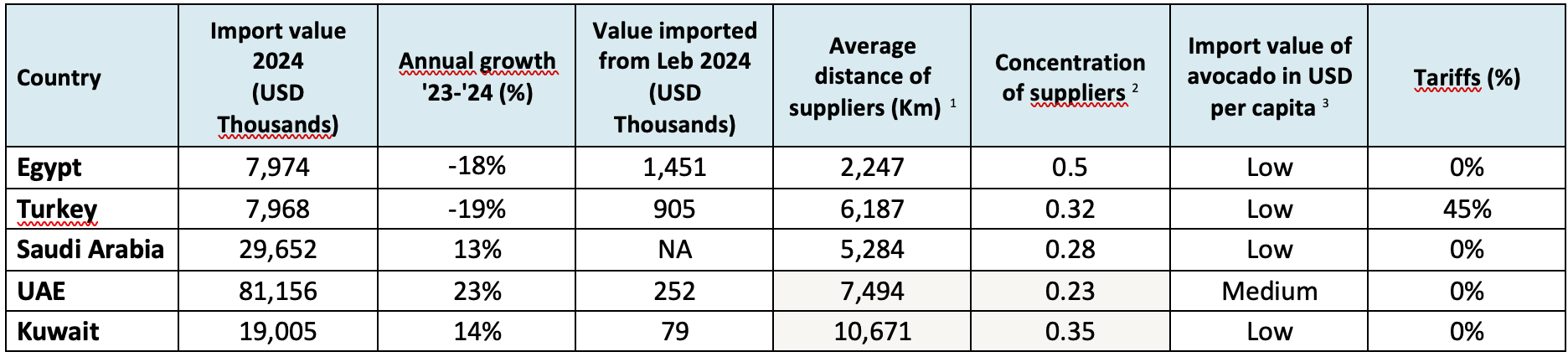
Table 3. Top 6 European potential markets for Lebanese avocados
Markets with Highest Export Potential




Tips
- Past studies suggested that Lebanon could enter the European market due to its potential for avocado exports. Today, this study confirms this view and shows that Lebanon has already entered several European markets, with even greater potential for the future, given the continued growth of the avocado market in Europe.
- Given that Europe is a large and growing market for avocados, Lebanon has a great opportunity to increase its market share in this region. With the Netherlands being the hub for Avocados in Europe, enhancing linkages between Lebanese exporters and distributers in Netherlands is a recommended distribution strategy.
- Israel and Morocco are Lebanon’s main regional competitors due to their similar climatic conditions and geographical location. As shown in Table 2, European imports from these two countries are almost zero during the June–August period, which gives Lebanon a competitive advantage. By focusing on a later harvest, Lebanon can target exports during these months, as this represents an open market window.
- ITC export potential map confirms our choices of Spain, France, and Egypt as promising markets since the data show how much unrealized potential they have for avocado imports.
- Israel has significantly expanded its avocado production in recent years by increasing planted acreage, adopting advanced irrigation and cultivation technologies, and investing in research to produce healthier and higher-yield seedlings. This has enabled record-breaking harvests and strong export performance. It also suggests that Lebanon should also adopt smarter farming practices and strategic market planning to increase its exports year-round, including outside the traditional harvest months.
- In the GCC; the UAE, Kuwait, and Qatar are the largest avocado importers, where Lebanon has a limited market share. UAE imports most of its avocados from Kenya and Mexico. Therefore, Lebanon should focus on exporting during the months when Kenya is not harvesting, particularly from October to February, which corresponds to Lebanon’s harvest window, in order to supply the UAE market.
- In the GCC, the UAE and Saudi Arabia are relatively large importers where Lebanon has limited market share. Low-priced, non-commercial “green” Kenyan avocados dominate these markets. For Lebanon to capture market share from Kenya, it would have to take advantage of Kenyan supply shortfalls between October and February, or increase demand for the higher quality avocados from Lebanon.
- Leverage Sustainability Branding: European and GCC consumers are increasingly conscious of sustainability and traceability. Highlighting eco-friendly farming practices, reduced pesticide use, and fair-trade certifications can give Lebanese avocados a premium positioning compared to low-cost suppliers.
- Develop Stronger Branding and Marketing: Establishing a “Lebanese Avocado” label backed by quality standards can help build recognition, especially in premium European supermarket chains that value origin branding.
- Promote Differentiation through Varieties: Lebanon could expand its presence by promoting niche avocado varieties with unique taste or texture that distinguish it from mass suppliers like Kenya, Mexico, and Peru.
- Lebanon has the potential to enlarge its markets in both Europe and the Middle East. Lebanon can start working on new methods like later harvest to compete with other exporting countries.
- UAE is a market with high potential for Lebanon. It imports most of its avocado from countries that only supply in non-harvest season of Lebanon. During the harvesting season in Lebanon, it imports from Mexico, whose supply has been decreasing annually. Neither Israel nor Morocco has tapped this market properly despite its great potential. Most of its suppliers are from Latin America and Africa, most of which harvesting seasons are opposite to the Lebanese one.
- Spain and France are a rising hub and could replace the Netherlands for Lebanese product if need be. Spain has an increasing local demand and European demand that is mostly covered by Peru/Latin America or Spanish/Moroccan avocado. Israel does not compete in the Spanish market a lot, which is why Lebanese should take it as a promising hub that complements supply in Q4 where only Moroccans really cover.