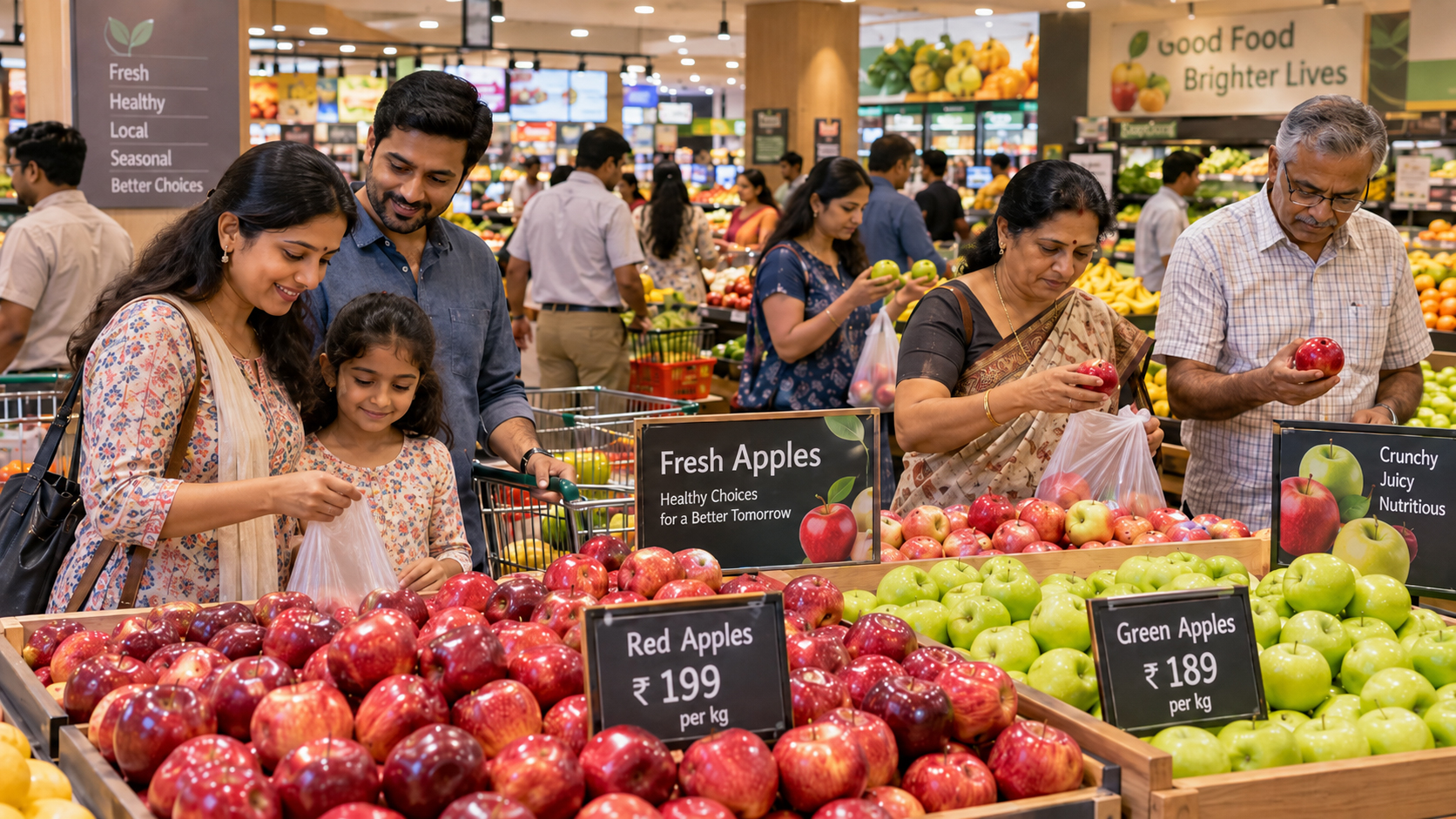
India’s imported apple market is entering a more competitive phase, with increasing supply from major exporting countries and growing consumer demand for imported apples. This evolution highlights the importance for exporters to differentiate through quality, variety selection and reliable supply partnerships.
For Lebanon, India represents one of the most promising future markets for fresh apples. LEBTRADE market analysis identifies India as a high-potential destination due to its large import volumes, recent growth and increasing demand for quality imported apples.
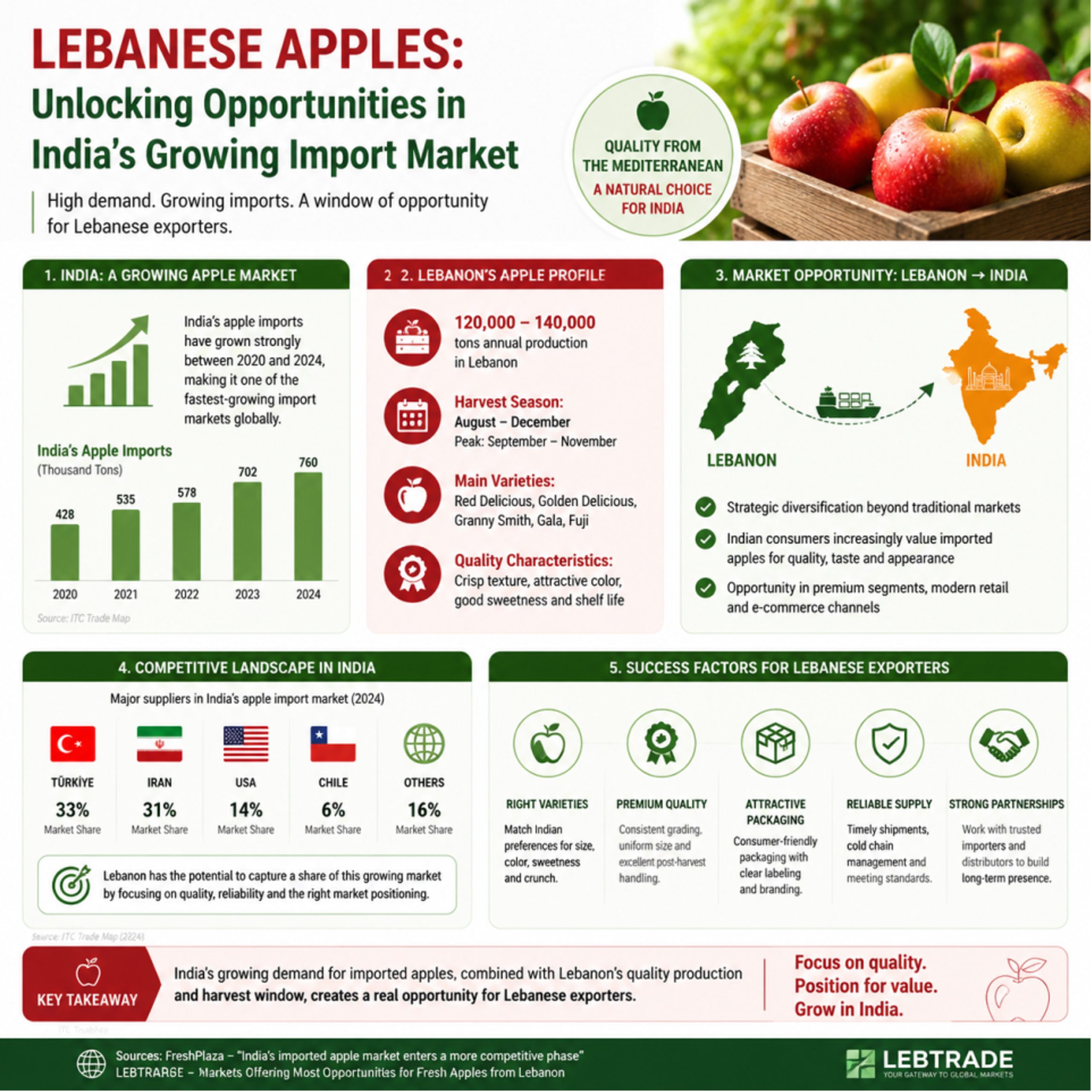
Lebanese Apples: Unlocking Opportunities in India’s Growing Import Market
Key opportunities for Lebanese exporters
India: a strategic growth market
India has emerged as one of the fastest-growing apple import markets, with imports increasing significantly between 2020 and 2024. The market offers potential for Lebanese exporters looking to diversify beyond traditional destinations and reduce dependence on Egypt, which currently represents the majority of Lebanon’s apple exports.
Seasonal alignment creates opportunities
Lebanon’s apple harvest runs mainly from August to December, with peak availability between September and November. India’s import demand remains significant during and after Lebanon’s harvest period, creating a potential window for Lebanese apples. However, exporters must compete with established suppliers, particularly Türkiye and Iran.
Quality and market positioning are essential
India’s imported apple market is becoming increasingly competitive. Lebanese exporters should focus on:
Premium-quality apples and attractive varieties
Consistent grading and packaging
Strong post-harvest management
Reliable supply and buyer relationships
Key takeaway
India offers Lebanon an opportunity to diversify its apple exports and access a large, growing market. Success will depend on understanding consumer preferences, selecting the right varieties and positioning Lebanese apples as a quality Mediterranean product.
Sources:
FreshPlaza – India’s imported apple market enters a more competitive phase
LEBTRADE – Markets Offering Most Opportunities for Fresh Apples from Lebanon
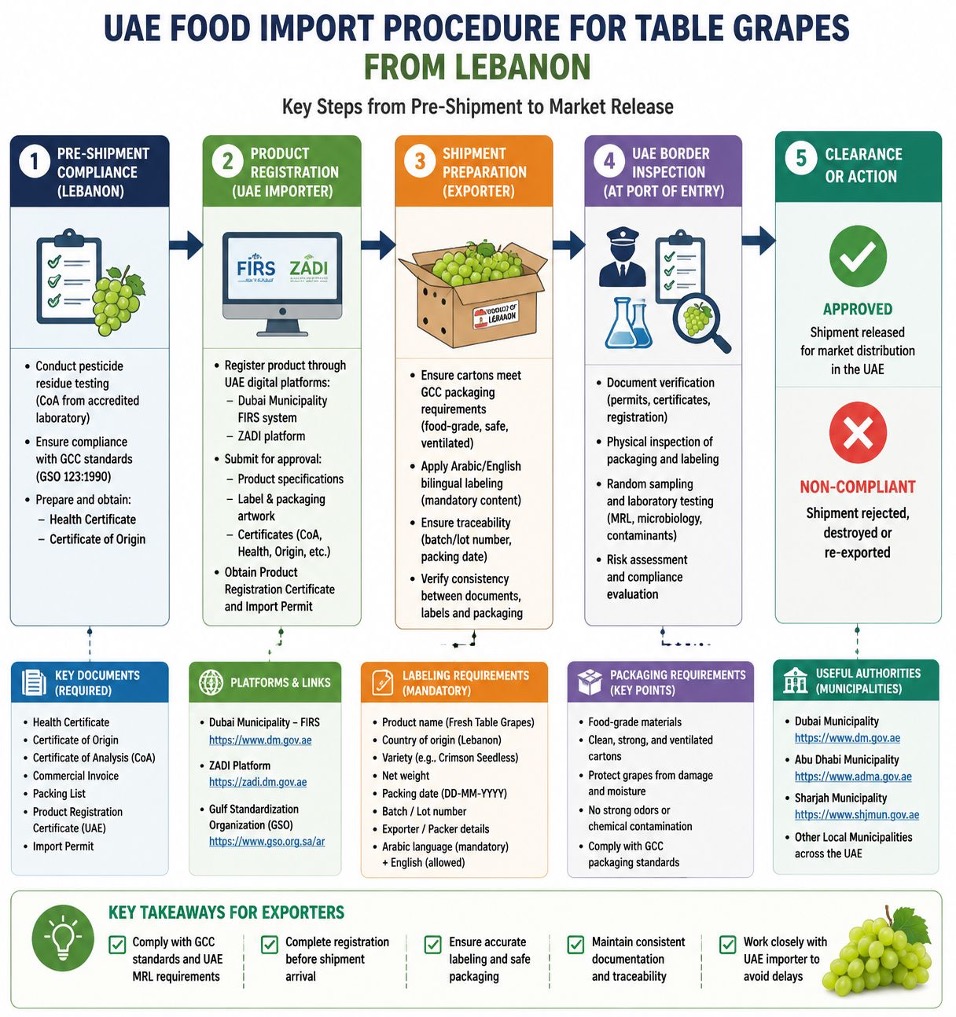
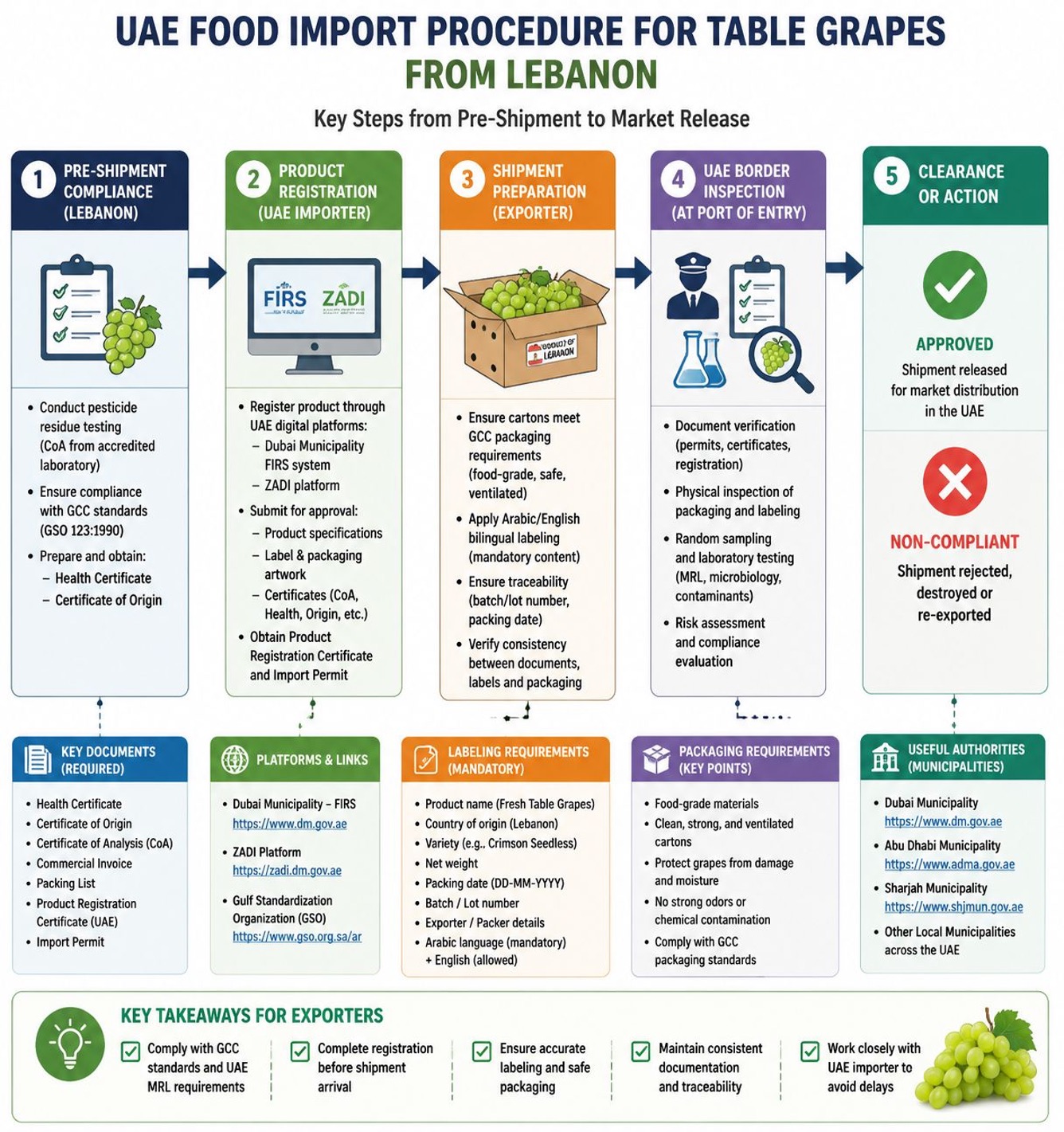
Understanding the UAE import process is critical for exporters aiming to access one of the region’s most regulated and high-value fresh produce markets.
The visual guide below breaks down the end-to-end compliance journey for table grapes entering the UAE, from pre-shipment controls in Lebanon to final market release.
Key takeaway
UAE market access is not shipment-based it is compliance-based. Documentation accuracy, pesticide residue control, and labeling conformity are critical success factors.
Exporters must ensure:
Full GCC (GSO) compliance
Accurate CoA and health documentation
Arabic/English labeling alignment
Pre-approval before shipment arrival
This framework helps ensure smoother customs clearance, reduced rejection risk, and faster market entry.
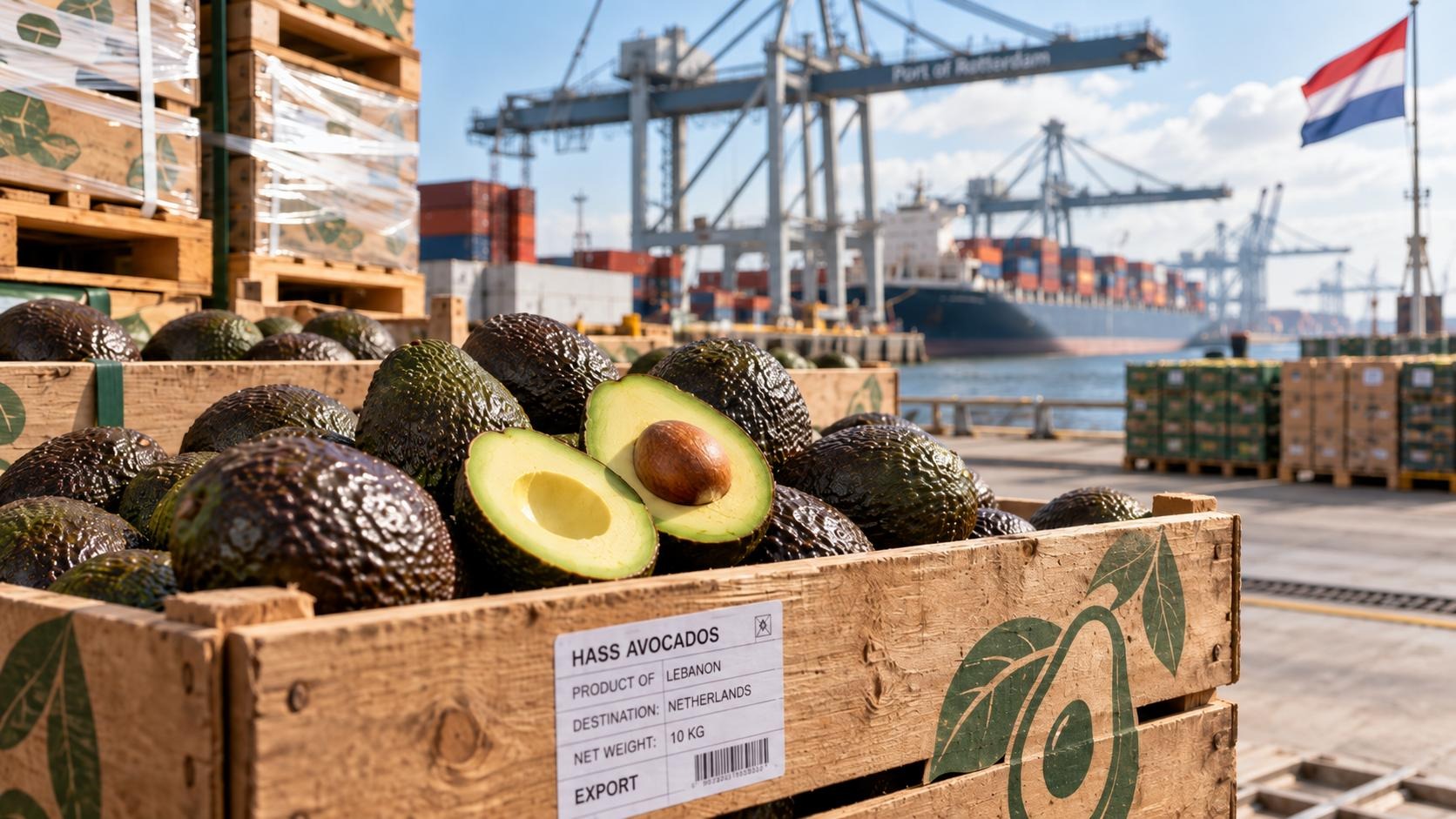
The Netherlands is an important hub for the trade of avocados in the EU. Lebanese exporters can benefit from this big and growing market. However, exporting fresh avocados from Lebanon to the Netherlands requires compliance with strict EU food safety, phytosanitary, quality, labeling, and documentation requirements. Notable requirements are listed below.
Key requirements
✔️ A phytosanitary certificate issued by the Lebanese plant health authority that proves the fruit is pest free and meets EU plant health standards (Regulation EU 2019/2072).
✔️ Compliance with EU pesticide residue limits (MRLs) and contaminant limits — exceeding these can lead to shipment rejection.
✔️ Meeting UNECE/Codex quality classifications — almost all EU importers require Class I or Extra quality, with uniform size, maturity, and defect control.
✔️ Proper packing, labeling, traceability information on crates/boxes as per EU rules.
✔️ Common certifications buyers expect include GLOBALG.A.P., HACCP based systems (e.g., BRC/IFS).
✔️ Standard export documentation, including Certificate of Origin, health certificate, and bill of lading from Lebanon.
Watch this helpful video on what exporters need to know about the EU avocado market and regulations listed above.
Understanding the UAE import process is critical for exporters aiming to access one of the region’s most regulated and high-value fresh produce markets.
This visual guide breaks down the end-to-end compliance journey for table grapes entering the UAE, from pre-shipment controls in Lebanon to final market release. Critical stages in the process
Key takeaway
UAE market access is not shipment-based it is compliance-based. Documentation accuracy, pesticide residue control, and labeling conformity are critical success factors.
Exporters must ensure:
– Full GCC (GSO) compliance
– Accurate CoA and health documentation
– Arabic/English labeling alignment
– Pre-approval before shipment arrival
This framework helps ensure smoother customs clearance, reduced rejection risk, and faster market entry.
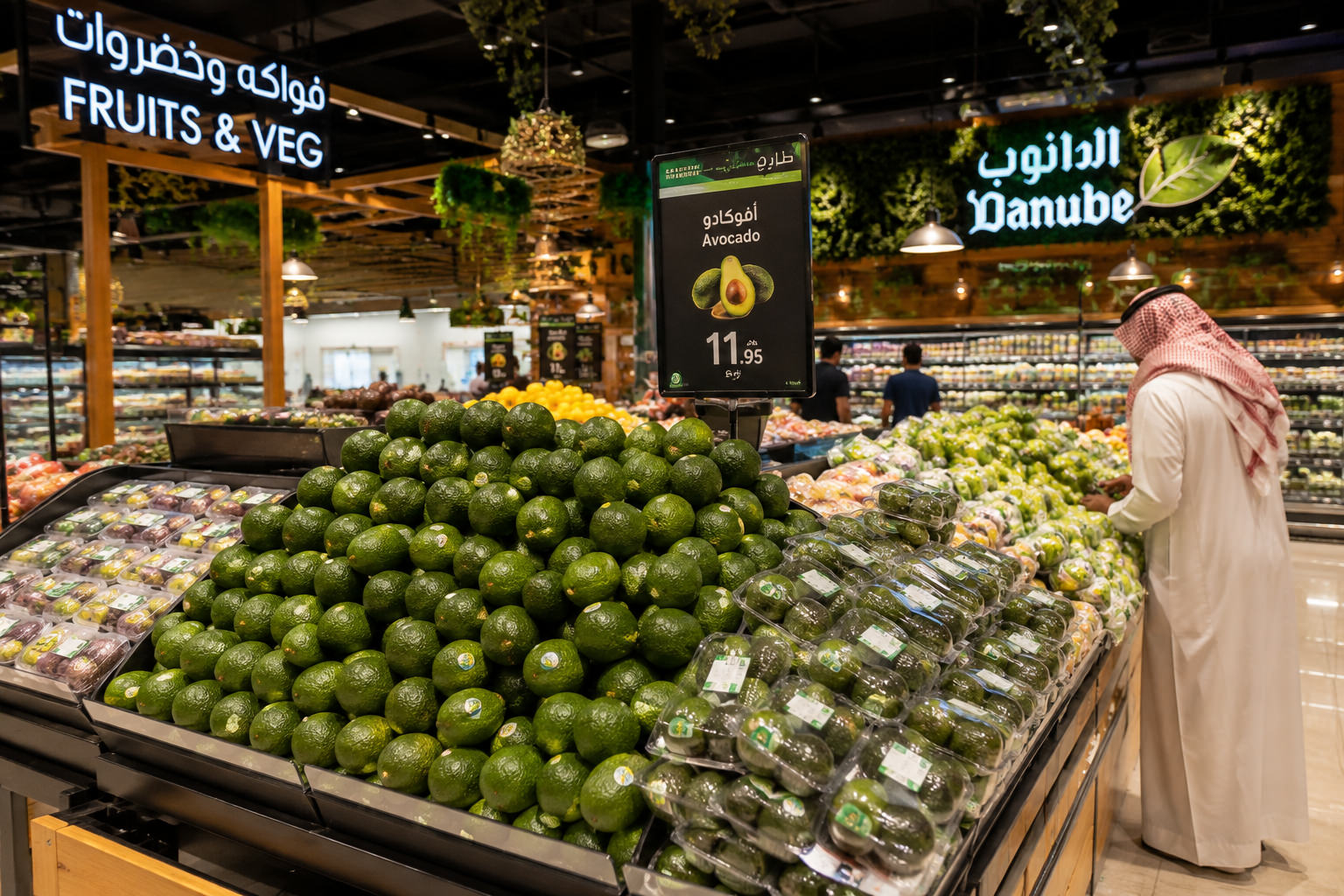
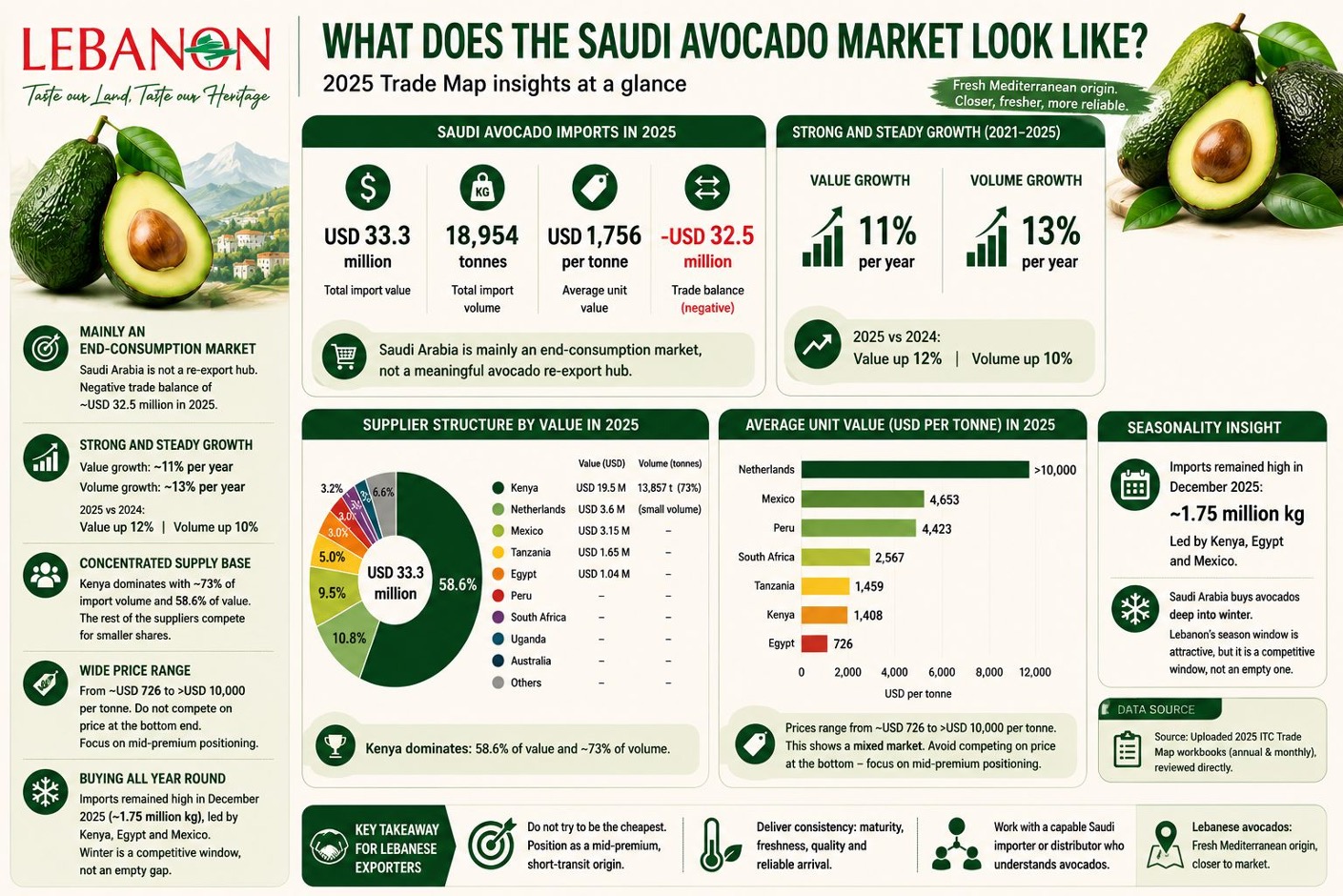
Saudi Arabia’s avocado market is growing and Lebanese exporters have a real opportunity following the lifting of the Saudi ban, opening the door for renewed trade discussions and stronger market positioning.
Positive trend
According to 2025 Trade Map insights, Saudi Arabia imported USD 33.3 million worth of avocados, reaching 18,954 tonnes in volume.
The market is showing strong momentum. In 2025 the import value went up by some 12%, and the volume up by 10%.
Positioning
Kenya currently leads the supply of avocados to the Saudi market with around 73% of import volume and 58.6% of value. But the key insight is positioning. Already from the data it shows that Kenya is shipping cheaper avocados. Moreover, Saudi buyers are looking for consistent supply, reliable quality, freshness, and competitive but sustainable pricing. That is what Lebanese exporters should keep in mind. It is not just a pricing game. Besides, winter demand remains strong, and Lebanon’s season can offer an attractive supply window.
For Lebanese avocado exporters, the message is clear:
✅ Do not compete only on being the cheapest
✅ Position Lebanese avocados as a fresh Mediterranean origin
✅ Focus on mid-premium value, quality, maturity, and reliable delivery
✅ Build partnerships with capable Saudi importers and distributors
Lebanese avocados have a strong story to tell: fresh origin, shorter distance, Mediterranean quality, and reliability.
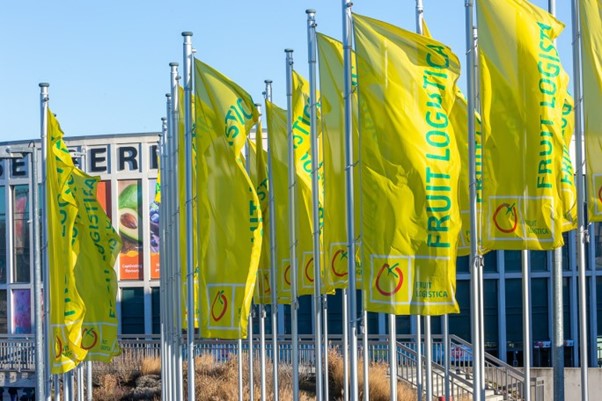
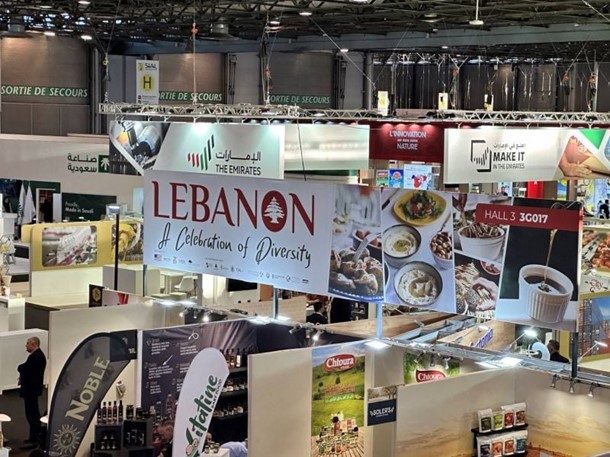
We are more than thrilled to announce that Lebanese companies will attend the next edition of Fruit Logistica in Berlin, Germany. Between the 8th and 10th of February, 8 Lebanese fresh fruits and vegetables producers will participate in Europe’s biggest exhibition for fresh produce.
The products offered by the companies include:
Organic avocados
Organic herbs
Table grapes
Carrots
Ready for partnerships
Over the last 2 years, the Lebanese companies received support from Center for the Promotion and Imports (CBI), to advance their production, marketing, and social responsibility. With support of the Rene Moawad Foundation (RMF) the farms obtained GLOBALG.A.P. certification to comply with the requirements of European buyers.
The interesting growth in production volume, off-season sourcing options and the low carbon footprint compared to sourcing from South America make the Lebanese companies interesting supplying partners for European buyers.
Meet the suppliers
Interested to discover the potential of the Lebanese fresh fruits and vegetables sector? Let’s meet in Berlin at Fruit Logistica 2023 in the City Cube MENA hall.
The International Food Exhibition (SIAL) in Paris officially opened its doors to visitors on Saturday, October 15th, 2022, following the inauguration ceremony of the Lebanese Pavilion, which was attended by the outgoing Minister of Industry, MP Georges Bouchikian, MPs Simon Abiramia and Michel Moawad, as well as the Director General of the Ministry of Economy and Trade Mohamad Abou Haidar and Lebanese Ambassador to France Rami Adwan.
Fair Trade Lebanon-BIEEL and Rene Moawad Foundation organized the Lebanese Pavilion at SIAL 2022, with the collaboration of the Ministry of Economy and Trade, the Ministry of Agriculture, the Ministry of Industry, and the Embassy of Lebanon in France. Around 20 Lebanese agro-food industries were represented at the national pavilion; for more information, please see the brochure.
The objective for these brands: to show themselves in their best light in order to strengthen the notoriety of Lebanese products abroad, both in terms of taste and quality standards, and thus allow the country to increase its exports.
In an attempt to put Lebanon on the trade map and to connect Lebanese producers with potential export opportunities on the US market, the Lebanese Embassy in Washington DC organized a 3-day event in December 2021 titled ‘Taste of Lebanon’. The event was organized under the patronage of the Minister of Economy and Trade Mr. Amin Salam, in collaboration with Fair Trade Lebanon, BIEEL, ALI, IDAL, and supported by the Embassy of the Netherlands in Beirut through RMF and PSDP.
The attendees participated in this ‘Meet the buyer’ event, along with 31 other Lebanese companies and around 80 invitees. Several US food agents and brokers were brought on board to provide future consultancy and ensure a smooth market entry.
The first day of the event focused on introducing the members to all attendees. The companies’ representatives worked on building business linkages with the event attendees and on highlighting the importance of opening new markets for the Lebanese products. One-on-one B2B virtual meetings followed during the next two days, where business connections were built and compliance regulations and procedures were explained.
On the 5th of November 2021, the Lebanese Ministry of Economy and Trade, represented by Minister Amin Salam, and Fair Trade Lebanon (FTL), represented by its President Mr. Samir Abdelmalak, signed a Memorandum of Understanding under the “Enhance Business innovation and Exports for Lebanon” (BIEEL) project.
This project is initiated by US MEPI and implemented by FTL. It aims to support local producers and cooperatives in the agri-food sector in developing their business and easing access to export markets.
FTL and the Ministry of Economy and Trade will collaborate to promote Lebanese gastronomy and specialty food products by:
Organizing international exhibitions and trade missions in targeted countries with promising markets for Lebanese products, to facilitate exports and help local producers expand.
Cooperating to increase capacities of the beneficiaries’ by organizing specialized workshops on food safety, export standards, and other topics.
Developing a national brand for Lebanese products
This partnership step is vital to support the agri-food sector in Lebanon, boost exports, and help small and medium sized producers and cooperatives.
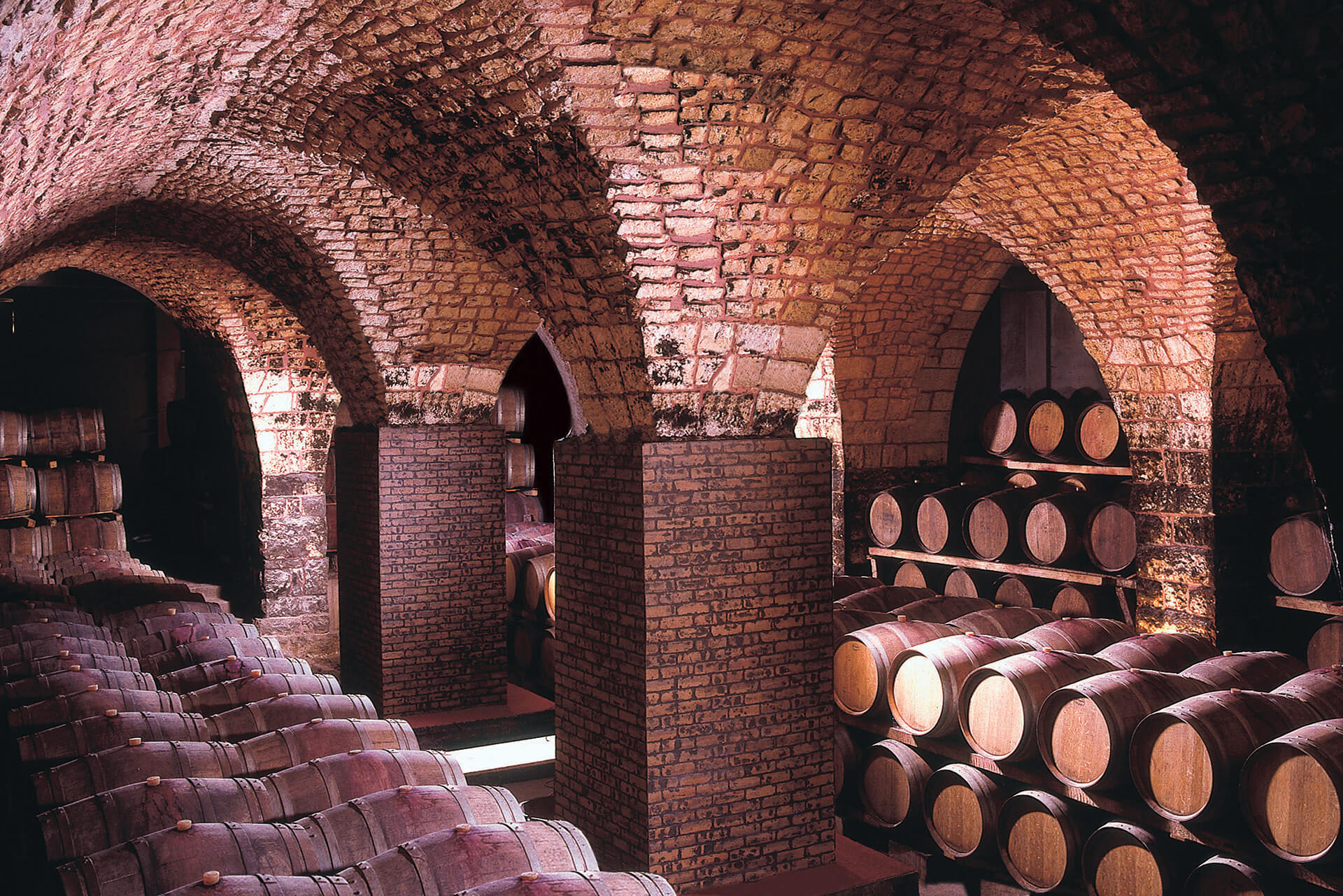
Economy and Trade Amin Salam delivered an opening statement at the launch event for the USAID Trade and Investment Facilitation (TIF) project entitled: Wine from Lebanon – Exporting Lebanese Wine to the United States.
The project aims to increase the export of Lebanese wine to the mainstream market in the American State of Texas. Under this project, TIF has facilitated the formation of a cluster of 15 Lebanese wineries.
TIF will help these wineries to penetrate the Texan market by:
enhancing their competitiveness
making them compliant with specific US market requirements
linking them to trade value chain actors
building brand awareness around Lebanese wine
preparing the wineries for export
The event brought together partner Lebanese wineries and key sector stakeholders to celebrate the launch of the project.